
STUDY PROJECT
The Effects of a Fidget Cube With an Integrated Ambient Display
Today’s work can be stressful, so we explored whether fidgeting and biofeedback could help people become more aware of their emotional state.
The project combined UX research, physical prototyping and interaction design to explore whether a playful physical object could support emotional self-regulation during desk work.
Duration
1 Semester
Focus
Study design • Hardware Prototyping • Usability Testing
Tools
Adobe Illustrator, Photoshop, Google Forms, Arduino IDE, Cinema 4D
What is…?
Fidgeting
Fidgeting is a natural behavior that often happens unconsciously. Fidget toys provide a way to channel this behavior while keeping the user’s attention on a primary task.
Ambient displays
Ambient displays communicate information in the periphery of attention, aiming to be useful without interrupting the user’s main activity.
Biofeedback
Biofeedback makes otherwise unconscious body signals more noticeable, allowing users to reflect on and potentially regulate their own state.
How does it work?
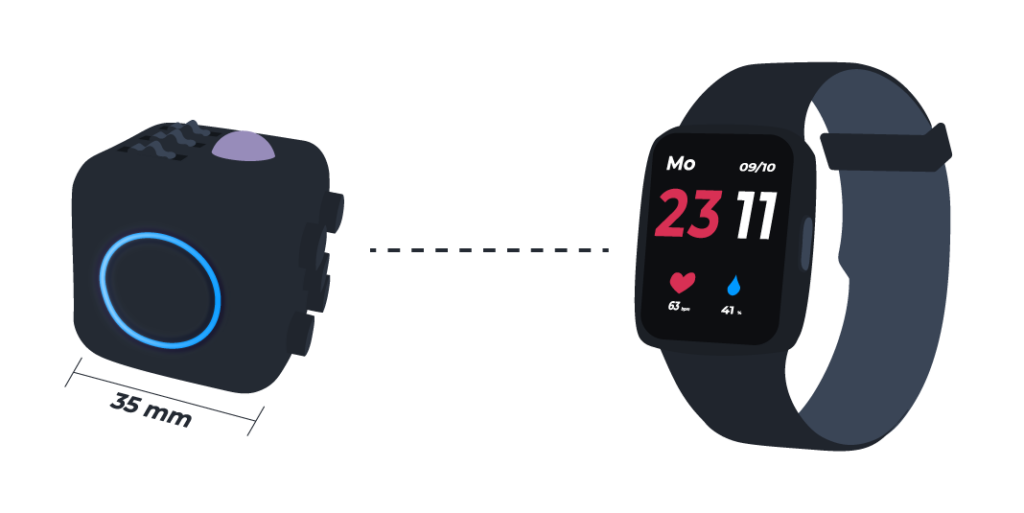
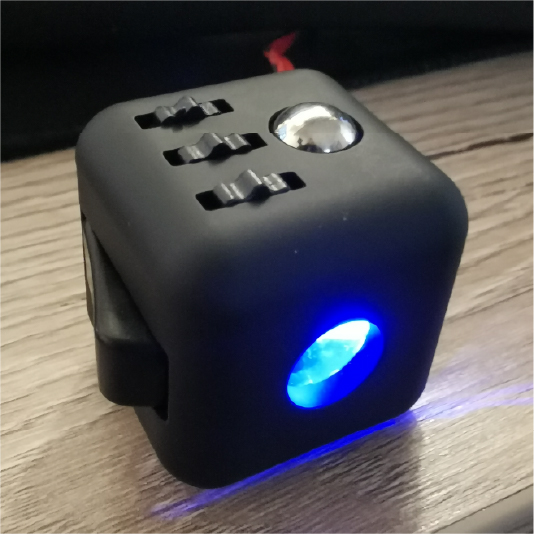
Our vision was a Fidget Cube with an integrated ambient display, connected to a smartwatch that tracks the user’s biosignals. The LED ring would provide subtle visual feedback based on the user’s emotional state and signal when it might be helpful to take a moment to fidget.
Concept Validation Survey
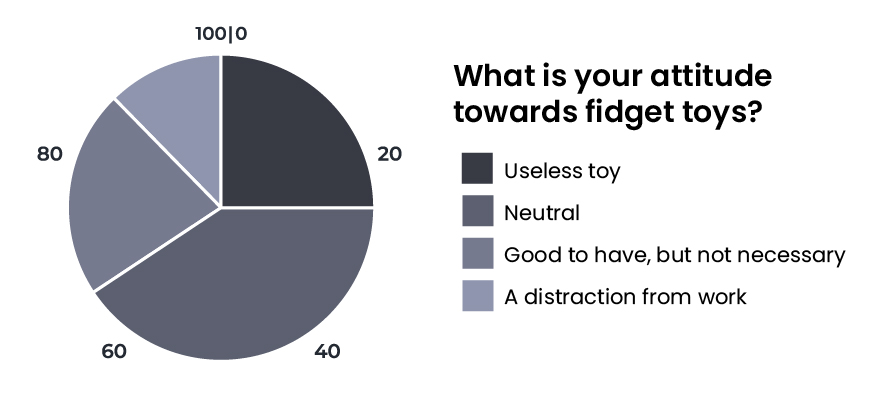
Before building the prototype, we conducted an online survey with 31 participants to explore our concept and understand our target group. We asked about perceived effects on focus and performance, attitudes towards fidget toys, and the visual design of the concept.
Hardware prototyping
The original concept was technically more complex than what we could build within the available time. We therefore adapted it while keeping the core interaction intact.
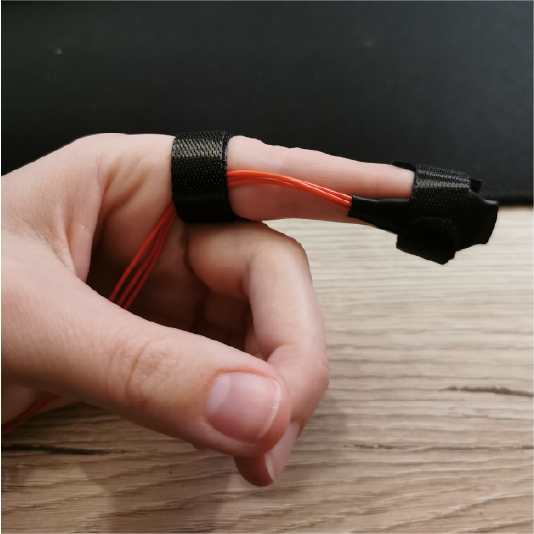
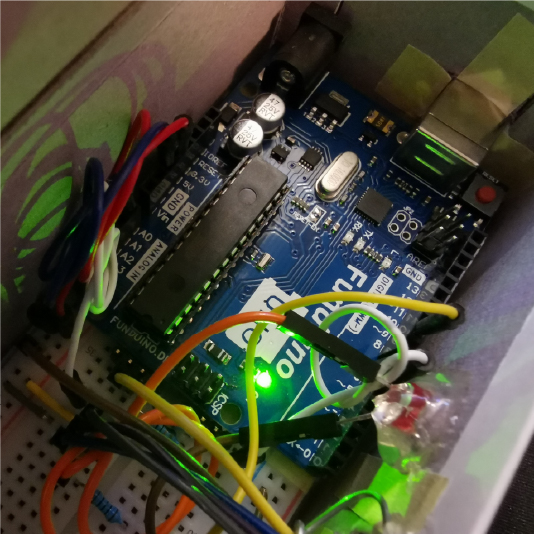
Instead of a smartwatch, we used a PPG sensor and Arduino to measure pulse and control the cube. A blue LED ring is triggered when the pulse exceeds 90 bpm, creating a short pulsing animation. This makes the user aware of the bio signal
Usability Study
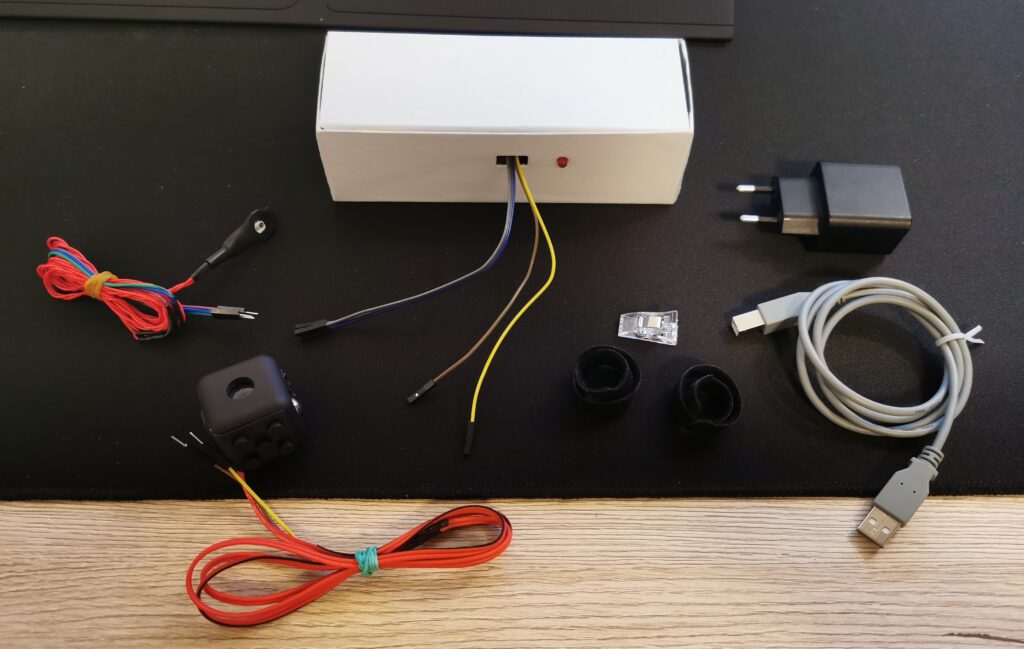
We then sent the prototype to 11 participants, together with assembly instructions, questionnaires and all necessary components. Participants used the prototype during their usual desk work for 30 minutes to up to 8 hours, allowing us to evaluate the interaction in a real-life setting.
Results
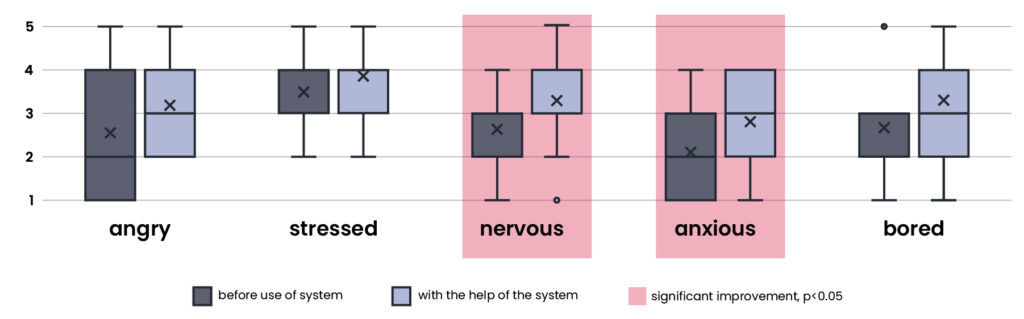
The study did not show an improvement in general focus or performance. However, participants reported feeling more supported when working while nervous or anxious, suggesting a possible effect on emotional self-regulation.
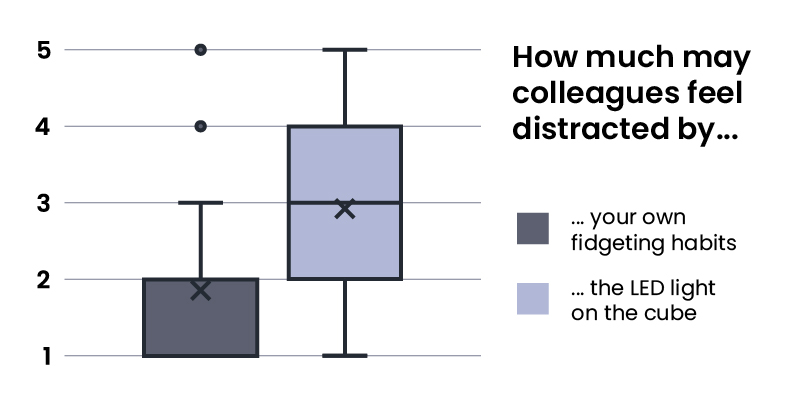
The concept was also well received visually, but the ambient light raised an interesting tension: while participants considered it a suitable signal, it could also become distracting. We also found that many participants had reservations about fidget toys — yet the actual reactions from colleagues were predominantly curious or amused rather than negative.